

What Is Artificial Intelligence? A Simple Guide for Beginners
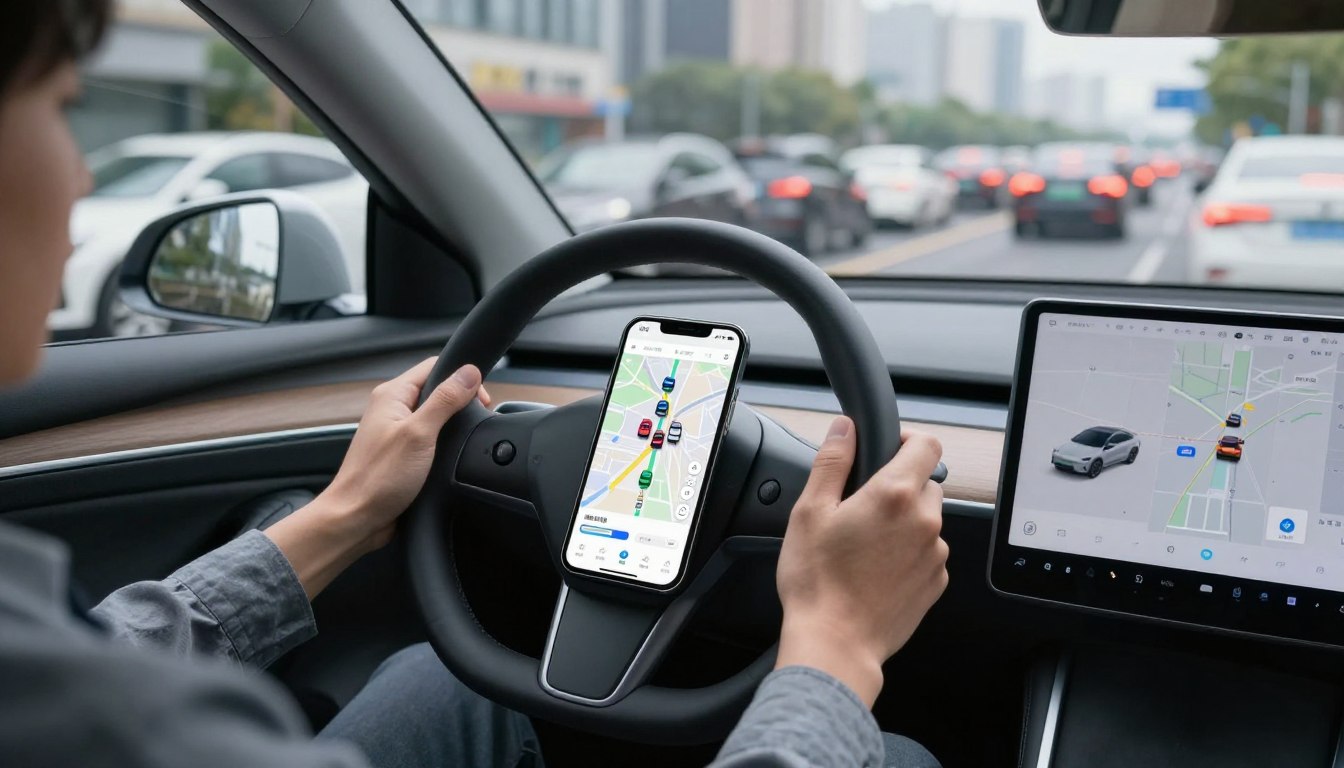
A navigation app rerouting you around traffic is one ordinary example of artificial intelligence at work. A streaming service recommending a show uses the technology, too. It appears in familiar places, not just in chatbots, and it does not think like a person. If you are new to AI, understanding it can help you make better choices about the software and services you use. You will get a practical picture of what AI does and how to approach its answers. A useful first step is to notice which everyday recommendations and automated replies are shaped by software.
Key Takeaways
- AI describes software that performs tasks linked to human abilities.
- Machine learning is one approach within AI, not a synonym for all AI.
- Most AI in use today is designed for particular tasks.
- Generative AI can create text, images, audio, video, or code.
- AI can help with analysis, but people remain responsible for important decisions.
- Check AI outputs before relying on them, especially in high-stakes situations.
What Is Artificial Intelligence?
Artificial intelligence is software that uses patterns in information to perform tasks that usually call for human abilities such as recognizing, learning, or deciding. The term describes capabilities, not one machine or app. It can simulate parts of human intelligence without being human.
In a computer, AI is a program or feature that analyzes input and produces an output. Image recognition can identify objects in a picture. A spam filter sorts email, while a recommendation engine suggests something you may like. AI is a field of computer science for creating programs that perform tasks people often do through perception, learning, reasoning, pattern recognition, and decision-making.
AI describes software capabilities, not one machine or app, and it can simulate some human abilities without being human.
These examples answer what artificial intelligence is with examples: a photo feature recognizes a cat, an email filter catches junk, and a streaming service recommends a show. The best definition of artificial intelligence is a field focused on building computer programs that carry out tasks commonly associated with human intelligence.
AI can help a computer make decisions, such as whether a message looks like spam. It does not need human awareness to do so. Its output follows patterns and rules built into the system. The task and the information available shape what it can do.
A recommendation engine is AI when it uses information about past choices to predict what someone may want next.
How Does Artificial Intelligence Work?
An AI model begins with information and a set of mathematical instructions for finding useful patterns in it. The task matters: a system sorting photos needs examples suited to image recognition, while one predicting demand needs relevant past records. Machine learning is a subset of AI in which models learn patterns from data to make predictions or decisions.
AI techniques rely on data, algorithms, and computing power, and the examples should represent the task the system will face. An algorithm is a set of instructions for processing information. Poor or incomplete examples can lead models to miss important patterns or produce unreliable predictions.
Data and algorithms shape the task
People select data and define what an AI system should produce. A model might receive a photograph and output a likely label. Useful examples should reflect the variety the system will encounter, such as different bird species, backgrounds, and lighting. More amounts of data do not automatically mean better learning if the examples are inaccurate or poorly chosen.
Models learn from examples and feedback
In supervised learning, each example pairs an input with a known label. A collection of bird pictures paired with bird names teaches a model to predict labels for unseen pictures. During training, the system compares predictions with correct answers and adjusts over repeated rounds.
Unsupervised learning looks for patterns in unlabeled data. Reinforcement learning improves through trial, error, and feedback about actions. These methods give models different signals, so not every AI system learns in the same way.
| Learning method | Training signal | Simple example |
|---|---|---|
| Supervised learning | Inputs paired with correct labels | Bird photos labeled with species names |
| Unsupervised learning | Unlabeled data with patterns to find | Grouping music listeners by listening habits |
| Reinforcement learning | Feedback on actions and outcomes | A game-playing model rewarded for a winning move |
A model can only learn patterns that its training examples and feedback make available.
How Are AI, Machine Learning, and Deep Learning Related?
Think of AI as the broad category, machine learning as one branch inside it, and deep learning as a more specialized branch within machine learning. Each term has a different scope, even when people use them interchangeably. Machine learning is a subset of AI, and deep learning is a subset of machine learning.
Machine learning modifies a system as it is exposed to more data. Deep learning uses multilayered neural networks to find complex patterns. A neural network is a computing structure made of connected layers that process information, somewhat like a simplified model of linked neurons.
| Term | Relationship | What it does |
|---|---|---|
| AI | Broad field that includes several approaches | Enables a computer to perform tasks such as recognizing images |
| Machine learning | One subset of AI | Uses data to adjust a model for predictions or decisions |
| Deep learning | One subset of machine learning | Uses multilayered networks to identify complex patterns |
| Neural networks | Structures used by many deep-learning models | Processes input through connected layers to create an output |
A deep neural network has an input layer, at least three hidden layers, and an output layer. Classic neural networks usually have one or two hidden layers. The added layers can help with complex tasks, but they also make the system harder to interpret.
These technologies overlap, but they are not interchangeable labels. A simple rule-based program may count as AI without machine learning. A neural network is not automatically a complete AI product; it is one approach a system can use.
The practical clue is that a deep-learning system uses a neural network with multiple layers to find complex patterns.
What Is Generative AI, and What Can It Create?
A generative AI tool responds to a prompt by producing something new, such as a draft paragraph, an image, or a piece of code. Its output is generated rather than limited to sorting information into categories. Deep-learning models can create text, images, video, and audio based on prompts and patterns learned during training.
Generative AI makes content, but a new answer is not proof of human intention or creativity. A prompt gives the model instructions or context. The system uses those directions to shape its output, which may be useful while still needing review.

How generative AI creates text
A large language model generates text by predicting a sequence of tokens. A token can be a word or part of a word. The model chooses likely next tokens based on patterns learned from language, then continues until it forms a response.
ChatGPT is an example of a text-generating chatbot. It can draft an email, explain a topic, or suggest code. Its process does not retrieve a guaranteed fact for every prompt. It produces language that fits learned patterns and the current request.
That distinction matters when you ask for a specific fact, a quotation, or a recent event. A fluent answer can still contain a mistake. The model’s ability to create natural language does not make every detail accurate.
How generative AI creates images and other content
Image systems turn prompts into pictures using learned patterns in visual data. DALL-E and Stable Diffusion are examples of image-generation tools. Audio and video systems can also create outputs from prompts, with the result shaped by the training and instructions they receive.
Generated content can be new in the sense that it is composed for that prompt. The model does not have human goals or personal experiences behind it. You can treat an output as a draft, then check facts, tone, and fit before sharing it.
Treat a generated answer as a starting point to review, not as proof that the model understands its subject.
Is Today’s AI Narrow or General?
The AI people use today is overwhelmingly specialized for particular tasks, rather than a general-purpose intelligence. Most is narrow AI, built to perform well within a limited area. A voice tool may handle spoken requests, while an image model may recognize objects, but neither can reliably take on every kind of work.
Artificial general intelligence, or AGI, is a theoretical ability to learn and apply knowledge across a broad range of tasks; it does not currently exist. The idea differs from narrow AI, which is designed for a specific job. A system can be impressive at one task and still lack the ability to transfer its skills broadly.
The history of AI includes an early question about machine intelligence. In 1950, Alan Turing proposed the Imitation Game, a test based on whether a machine could imitate human conversation convincingly. John McCarthy coined the term artificial intelligence in 1956.
That history does not mean current models have human intelligence. Their learning and development focus on defined tasks, and even a broad set of features does not automatically make a system general. A chatbot might write, summarize, and answer questions, yet still struggle outside those learned capabilities.
People sometimes mistake confident language for general intelligence. A system’s words can sound natural without showing human understanding, independent goals, or wide-ranging judgment. Those limits matter when you decide what responsibilities to give it.
A fluent chatbot is still a specialized system, not evidence that AGI has arrived.
Where Do You Encounter AI in Everyday Life?
A phone can use AI to suggest a route, while a music app can use it to recommend a song. These features are specific: they receive information and return a suggestion or classification. An AI feature may be only one component of a larger app.
Here are five familiar examples, with the input and output made clear:
- Google Maps receives your destination and route conditions, then suggests a route.
- Spotify uses listening choices and activity to recommend music.
- Netflix uses viewing history and preferences to recommend shows.
- An email filter examines message details, then sorts likely spam away from your inbox.
- Siri or Alexa receives a spoken or typed request, then returns a reply or performs a supported action.
Some tasks in these apps rely on AI, while other features may use standard software rules. A map’s display, for example, is not automatically an AI system just because its route suggestions may use prediction. The same distinction applies to chatbots and virtual assistants.
Recognizing the input and output helps you see where software is making a prediction. A music recommendation uses information about listening behavior. A filter classifies a message. A voice assistant processes language to respond to a request.
Look for a specific prediction, recognition, or recommendation rather than assuming every feature in an app is AI.
What Can AI Do Across Different Industries?
In healthcare, software can help flag patterns in images or records for a qualified person to examine. It can speed analysis by processing large amounts of information, but it cannot take responsibility for a clinical decision. AI supports work when its limits and role are clear.
AI can process information quickly and repeat a task consistently, but it does not replace human judgment or responsibility. Across industries, useful systems target tasks with recognizable patterns, large data sets, or routine steps. The result is a tool for people, not a substitute for accountable decision-making.
Healthcare and scientific work
Image analysis can flag areas in a scan for a clinician to review. AI can also help researchers examine data, find patterns, and organize evidence. These systems may support work, but clinical decisions need appropriate professional oversight, including review of the records and circumstances behind a result.
Optical character recognition, often called OCR, extracts text and data from images or documents. It can turn a scanned form into searchable text or pull details from a page for further analysis. A person may still need to correct a name, number, or damaged line.
Finance, transportation, and business operations
In finance, systems can detect fraud patterns in transactions for staff to examine. Transportation and operations tools can help plan routes or schedules. Predictive maintenance systems look for signs that equipment may need attention, while customer-support tools can sort questions or draft replies.
These uses can make a difference when the task is repeated at scale. They can also miss context that a worker would notice. A business should decide which outputs need human review before allowing software to affect customers, equipment, or money.
Other workflow examples show how AI can help with focused tasks:
- Flagging an unusual transaction for a review team.
- Drafting a first version of code for a developer to inspect.
- Sorting incoming requests into service categories.
- Forecasting when equipment may need maintenance.
Use AI to speed up analysis or routine work, while keeping a human accountable for consequential choices.
What Are AI’s Benefits and Risks?
AI can save time on repetitive work, but the same systems can also produce convincing mistakes or unfair outcomes. The effects depend on use, not on a simple label of good or bad. AI’s effects depend on the task, the data, the safeguards, and human oversight.
AI can analyze information faster than a person in some settings, automate repetitive tasks, and provide support outside normal business hours. Those advantages are useful when the system has a clear purpose and people can check its work. Speed alone does not make an output dependable.

Where AI can help
Automation can reduce time spent on routine steps, such as sorting common requests or organizing documents. A system that stays available around the clock can answer simple questions when staff are away. People can then focus on tasks that need context, communication, or judgment.
Documented AI incidents rose to 362 in 2025, up from 233 in 2024. That figure does not mean every system is unsafe. It does show why testing, oversight, and clear rules matter as AI use expands.
Where AI can cause harm
Generative AI can make up information or present an inaccurate answer confidently. A model trained on biased hiring data can support unfair decisions. Users may also expose private information by entering it into a public tool, while attackers can exploit data poisoning or model tampering.
Before relying on a system, check for these distinct concerns:
- Inaccurate or fabricated answers presented with confidence.
- Exposure of private or confidential information.
- Unfair outcomes shaped by biased data.
- Cybersecurity threats such as data poisoning or model tampering.
Good safeguards include limits on sensitive uses, checks for uneven outcomes, and a person who can question a result. A system should not make a high-stakes choice simply because it produces an answer quickly.
Verify any AI output before acting on it, especially when health, money, safety, or someone’s rights are involved.
How Is AI Changing Work Around the World?
The United States, China, and South Korea lead on different AI measures, so the answer to which country is number one changes with the measure. Leadership is split across models, research, patents, investment, and adoption. No single country leads every part of AI development.
Industry produced over 90% of notable frontier AI models in 2025. In a performance comparison as of March 2026, Anthropic’s top model led the top U.S.-China comparison by 2.7%. U.S. and Chinese models traded the lead multiple times since early 2025.
Where AI development is concentrated
These measures describe different kinds of strength, not one universal ranking. The United States had more top-tier models and higher-impact AI patents. China led in AI publication volume, citations, patent output, and industrial robot installations. South Korea led in AI patents per capita.
| Country | Reported areas of strength | A useful qualification |
|---|---|---|
| United States | More top-tier AI models and higher-impact AI patents | China led in publication volume, citations, patent output, and industrial robots |
| China | AI publications, citations, patent output, and industrial robot installations | The United States had more top-tier models and higher-impact AI patents |
| South Korea | AI patents per capita | That measure does not make it the leader in every AI category |
Investment and company formation add more context. U.S. private AI investment reached $285.9 billion in 2025, compared with $12.4 billion in China. The United States had 1,953 newly funded AI companies, more than ten times the next-closest country.
Talent movement is another part of the picture. The number of AI researchers and developers moving to the United States fell 89% from 2017 to 2025. A country can remain strong in investment or models while seeing a shift in where talent chooses to work.
What current job data shows
Job evidence is mixed, and no single measure proves AI caused a change. Since 2022, unemployment among workers in the most AI-exposed occupational fifth rose 0.77 percentage points. It rose 0.85 percentage points among workers in the least-exposed fifth.
Unemployment among recent U.S. graduates reached 5.6% in early 2026, up 1.6 percentage points from three years earlier. Employment among software developers ages 22-25 fell nearly 20% since 2024, while headcount among older colleagues grew.
Those figures deserve attention, especially for people entering a field. Still, there is little evidence that AI is causing significant job losses overall at present. AI’s effect on worker productivity is mixed but generally positive, and changes in hiring can have several causes.
How widely people use AI
Organizational AI adoption reached 88% in 2025, while generative AI reached 53% population adoption within three years. Four in five university students used generative AI. In the United States, 80% of high school and college students used AI for school-related tasks.
People do not always agree on what this shift means. Seventy-three percent of AI experts expected a positive effect on how people do their jobs, compared with 23% of the public. Only 6% of teachers said their school’s AI policies were clear.
These gaps matter because people encounter AI in different settings and with different support. A workplace may set rules, while a student may be unsure which uses a teacher permits. Clear expectations can help users understand when to disclose AI assistance or verify work.
Treat a change in one occupation or survey as a signal to watch, not proof that AI alone caused it.
How Can You Tell Whether an AI Model Is Reliable?
A benchmark score tells you how a model performed on a defined test, not whether it will be reliable in every situation. The test has a scope, and a strong result only answers the questions that test asks. Use benchmark results as evidence about a specific capability, not a guarantee for real-world use.
Benchmarks let researchers compare models on shared tasks. Scores can show progress, but performance can vary across questions, settings, and versions. A result may also hide whether the system knows when it is uncertain.
What benchmark scores can show
Recent results show gains in several areas. SWE-bench Verified performance rose from 60% to near 100% in a single year. Frontier models met or exceeded human baselines on PhD-level science questions, multimodal reasoning, and competition mathematics.
| Benchmark or test | Capability tested | Reported result | What the result does not prove |
|---|---|---|---|
| SWE-bench Verified | Solving software engineering tasks | Performance rose from 60% to near 100% in one year | It does not prove every code change will work in a live project |
| OSWorld | Completing tasks in a computer environment | AI agents rose from 12% to about 66% success | Agents still failed roughly one in three attempts on structured benchmarks |
| Humanity’s Last Exam | Expert-level questions across dozens of subjects | Frontier models had low accuracy and calibration | A score does not ensure dependable answers outside the test |
| Analog-clock questions | Reading time from clock images | The top model answered correctly 50.1% of the time | Strong results elsewhere do not imply strong visual time reading |
Humanity’s Last Exam contains 2,500 expert-level questions, contributed by nearly 1,000 experts at more than 500 institutions in 50 countries. About 14% of its questions require understanding both text and an image. Gemini Deep Think earned a gold medal at the International Mathematical Olympiad.
Where strong results still fall short
Benchmarks can focus on narrow skills, and performance can change sharply from one task to another. Agents improved on OSWorld, yet still failed about one in three attempts. A high score on one test does not settle how a model will handle an unfamiliar request.
Calibration matters when a system expresses confidence. A calibrated model’s confidence should match how often its answers are correct. On Humanity’s Last Exam, most models had root mean square calibration errors above 70%, showing that confident responses can misstate reliability.
State-of-the-art models exceeded 90% accuracy on MMLU, a broad knowledge benchmark. When leading systems score very highly, that test may stop distinguishing their strongest capabilities. Even a near-perfect score cannot guarantee a correct response in a new real-world situation.
For an important decision, test the exact task and check whether a person can verify the result.
How Can People Use AI Responsibly?
Before using an AI tool, check what information you are about to share and who can access its output. Privacy comes first when a prompt includes details about you, a customer, or your workplace. Do not enter sensitive information into a public chatbot unless the service is approved for that information.
Keep passwords, financial account details, private health information, and confidential work data out of public tools unless your organization has approved their use there. Check important claims against reliable sources, and decide when a qualified person should review an answer before action.
Use this personal checklist before and after prompting:
- Remove sensitive data that the tool does not need.
- Verify important claims with a reliable source.
- Check whether the answer may reflect bias.
- Ask a qualified person to review consequential output.
- Use only tools approved for the information and task.
Protect information and check outputs
A chatbot response can sound polished without being correct. Check names, numbers, and claims before you repeat them, especially if the answer affects health, finances, safety, or someone’s rights. Keep a human involved when an output could have a lasting effect on another person.
Use a risk-management process
The NIST AI Risk Management Framework is a voluntary way for organizations to organize risk work. NIST released AI RMF 1.0 on January 26, 2023. Its four functions help teams build a repeatable process instead of treating risk checks as a one-time task.
Govern sets roles, policies, and accountability. Map identifies the system’s purpose, context, and possible effects. Measure tests and tracks risks. Manage prioritizes those risks and takes action to reduce them.
NIST released a Generative AI Profile, NIST-AI-600-1, on July 26, 2024. On April 7, 2026, it released a concept note for a Trustworthy AI in Critical Infrastructure profile. These tools address different needs as teams consider how to govern AI use.
Thirty-one percent of surveyed people in the United States trusted their government to regulate AI. That figure describes public trust, not whether regulation works or fails. Clear roles and transparent oversight still matter to organizations using AI systems.
Use public AI tools only for information they are approved to handle, and keep a person responsible for consequential decisions.
For an organization, assign a named person to review AI risks before a system is used for consequential decisions.
Conclusion
The simplest way to understand today’s AI is as software that learns patterns and uses them to help with specific tasks. Most systems are specialized, producing predictions, decisions, or generated content from data. Helpful assistance is not human judgment, so people still need to check results that matter.
Choose a low-stakes feature already available in an app, such as a tool that suggests a playlist or rewrites a short note. Give it a simple task, then compare the answer with something you trust. That small experiment can show where the feature saves time and where it needs your attention.
Try one low-stakes task with an AI feature this week, then check its answer against something you know to be reliable.
FAQ
What can AI do that humans can’t?
AI can process large amounts of information quickly and repeat a task consistently, but it does not have a general ability that replaces human judgment. For example, software can scan thousands of records for a pattern faster than a person could. A human still needs to decide whether the pattern matters, whether the data is suitable, and what action is fair.
Which country is no. 1 in AI?
The United States leads some measures, China leads others, and South Korea leads in AI patents per capita. The United States had more top-tier models and higher-impact AI patents, while China led in publication volume, citations, patent output, and industrial robot installations. The answer changes with the measure, so name the area before calling any country number one.
Is AI good or bad?
AI can be useful or harmful depending on its purpose, training data, safeguards, and human oversight. It can assist with routine work and help people analyze information, but it can also produce inaccurate or biased outputs. A practical rule is to match the system to a suitable task, check what it returns, and keep a person responsible for important decisions.
What to never say to AI?
Do not share passwords, financial account details, private health information, or confidential work data with a public chatbot unless the service is approved for that information. A prompt may be stored or handled in ways that differ by service. If you need help with a sensitive situation, remove identifying details or use a tool your organization has cleared for that data.
Can AI make mistakes?
Yes, AI models can produce inaccurate or fabricated answers with confidence. A model may misread a question, rely on weak patterns, or give an answer that sounds plausible but is wrong. Check high-stakes claims against a reliable source or ask a qualified person to review them. Treat a confident tone as style, not proof of accuracy.
 Martin Claw